
Automated Exception Tracking
Reduce Risk By Maintaining Control of Loan and Deposit Requirements
FOR WHO
Banks & Credit Unions
WHY IT MATTERS
Reduce operational risk, maintain compliance, and ensure required documents are tracked and resolved.
WHAT YOU'LL LEARN
How modern exception tracking works, why integrated systems matter, and how INFO-ACCESS helps institutions monitor and resolve document and policy exceptions more efficiently.
KEY OUTCOMES
– Clear visibility into outstanding exceptions
– Faster resolution of missing documents
– Stronger compliance and audit readiness
– Real-time monitoring of document requirements
Exception Tracking with INFO-ACCESS
Financial institutions operate in policy- and document-driven environments. Policy exceptions are typically identified during underwriting, but the majority of exception management occurs after closing, when documentation and compliance requirements must be managed over time.
In an unstructured system, financial institutions experience the following challenges:


Every loan and deposit relationship carries requirements- financial statements, insurance certificates, collateral documents, and other critical records- that must be collected, tracked, and maintained.
This is where the real operational challenge begins. After closing, institutions must ensure these requirements are continuously monitored and resolved throughout the life of the loan or account.
Without a structured process for managing exceptions, critical requirements are easily overlooked, creating operational inefficiencies and unnecessary risk.
The Need for Exception Tracking
Exception tracking is the process of identifying, monitoring, and resolving missing or required documents tied to loans, deposits, and customer relationships.
An effective exception tracking system ensures that required documents and requirements are identified, tracked, and satisfied in a structured and automated way.
Methods for Tracking Document Exceptions
Financial institutions have historically relied on several different approaches to track missing or required documents. While each method attempts to maintain visibility, many introduce inefficiencies, manual processes, and operational risk.
1
Tracking Spreadsheet
Many institutions rely on spreadsheets to track missing documents or policy exceptions. While simple to implement, spreadsheets quickly become difficult to maintain as portfolios grow.
Common challenges include:
Inconsistent data entry
Risk of outdated or incomplete tracking
Time lost managing exceptions across multiple systems
Difficulty ensuring items are resolved once documentation is received
Bottom line: Spreadsheets often become static lists rather than active management tools.
2
Stand-Alone Tickler System
Some institutions use a dedicated tickler or reminder system to track document requirements and expiration dates.
While this improves structure compared to spreadsheets, these systems often operate separately from the document archive.
This separation can create additional work for staff who must:
Manually update ticklers when documents are received
Switch between multiple systems
Verify whether requirements have actually been satisfied
Bottom line: Even with automation, teams may still rely on manual verification and struggle with duplicate tracking.
While these methods may function at a basic level, they are often tedious, time-consuming, and prone to human error, introducing unnecessary risk and quickly limiting an institution’s visibility and control.
The solution
3
Exception Tracking Tied To Document Imaging
The third and most effective approach for exception tracking is to integrate exception tracking directly with document imaging.
Document data, such as document type, expiration dates, and customer relationships, automatically drive exception tracking. This allows the system to monitor requirements and resolve exceptions the moment documentation is received.
When exception tracking and document imaging work together, institutions can manage exceptions in a centralized, searchable, and controlled environment.
The results are:
Required documents are tied directly to loan and deposit records
Exceptions are automatically satisfied when documents are archived
Management gains real-time visibility into outstanding exceptions
This integrated model allows institutions to manage document requirements as part of normal workflows rather than as a separate administrative task.
Example Workflow
INFO-ACCESS: Exception Tracking in Daily Operations
See how our clients benefit from a system that integrates document imaging and exception tracking to improve the clearing of exceptions, in the process below:
1
Document is Uploaded
An employee- lender, loan assistant, or operations staff-uploads a document into INFO-ACCESS.
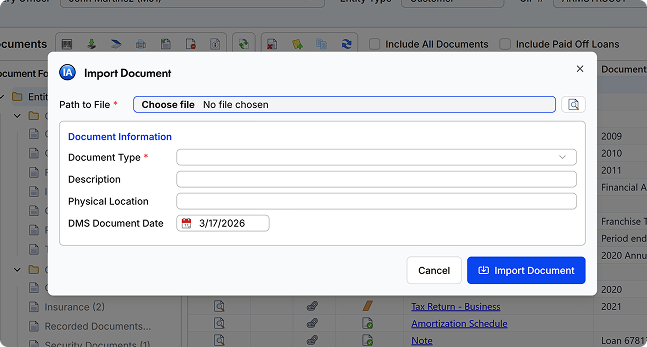
The document is automatically archived to your document management system (Synergy, OnBase, or other) and linked to the appropriate loan, deposit, or customer relationship.
2
Exceptions Are Automatically Matched & Cleared
If a required document or exception exists, INFO-ACCESS instantly matches the new document to the tracked tickler item, automatically satisfying the exception and turning its icon from red (missing) to green (satisfied).
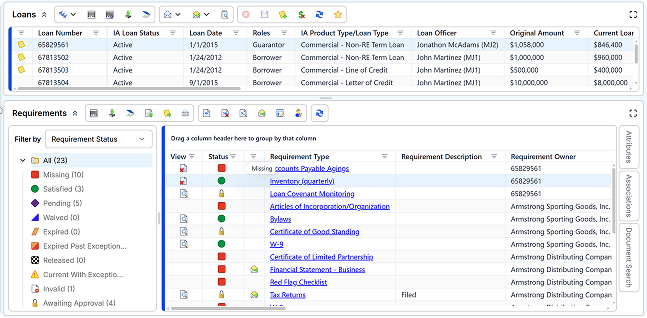
Exceptions are satisfied upon document upload in real-time. No manual updates or follow-up needed.
3
Visibility Updates in Real Time
The loan or deposit account officer’s personal interactive exception work queue updates immediately, and the exception is automatically removed from management reports.
All of these things happen at the same time, without your team updating a siloed spreadsheet or working in multiple systems.

Why Exception Tracking Matters
Exception management is a core operational and regulatory responsibility for financial institutions. Regulators expect banks and credit unions to maintain clear visibility into outstanding exceptions and demonstrate that they are actively monitored and resolved.
An integrated document imaging and exception tracking system allows institutions to:
- Maintain real-time visibility into outstanding exceptions
- Track both document and policy exceptions across the portfolio
- Automatically resolve exceptions when required documents are received
- Provide clear reporting for management and examiners
- Maintain a complete history of exception activity
By connecting exception tracking with document imaging, exception management is transformed from a manual administrative process into a structured, automated workflow.
The result is stronger compliance, improved operational control, and greater confidence during examinations.
In summary
Smarter Exception Management Starts Here
Exception management is a critical function across banks and credit unions, yet it often relies on manual, time-consuming processes to identify, track, resolve, and report on outstanding items. To reduce operational burden and risk, institutions need a system that automates exception tracking as part of everyday workflows.
INFO-ACCESS delivers advanced exception tracking functionality by integrating document imaging directly into the process. As documents are received and archived, exception statuses are automatically updated-eliminating manual tracking and reducing the risk of oversight.
The result is improved visibility into outstanding exceptions, greater operational efficiency, and stronger audit readiness across the institution.
Get More Details On Exception Tracking
Download our Deposit Tracking and INFO-ACCESS flyers instantly—just enter your information and access them right away.
Other Key Factors to Consider
Discover how INFO-ACCESS helps financial institutions centralize documents, monitor documentation requirements, and improve operational confidence.
Ready to Explore Partnership?
Connect with a specialist to learn more about INFO-ACCESS and how we can best tailor it for your institution’s needs. We walk alongside you with hands-on guidance every step of the way.